Hunza Valley
The Hunza Brushiski, ShinaWakhi and Urdu) is a mountainous valley in the Gilgit-Baltistan region of Pakistan. The Hunza is situated north/west of the Hunza River at an elevation of around 2800 metres to 8,700 ft The territory of Hunza is about 7,900 square kilometres (3,100 sq mi). Aliabad is the main town while Baltit is a popular tourist destination because of the spectacular scenery of the surrounding mountains like Ultar Sar, Rakaposhi, Bojahagur Duanasir i Ghenta Peak,Hunza Peak, Passu Peak, Diran Peak and Bublimotin Ladyfinger Peak,
The blog elaborates the rich culture of Hunza with reference to historical,cultural,anthropological and cological perspective. (jatoori)
Tuesday, February 9, 2016
Sunday, June 1, 2014
Heavenily Hunza Valley
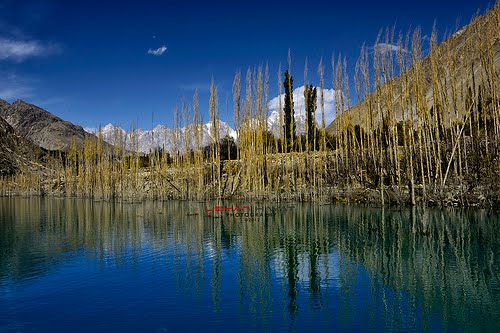
The visitors to Hunza are overwhelmed by the rugged charm, the fragrant breeze singing through graceful poplar trees and the velvet-like green carpet of wheet fields, set against the background of snow-covered mountains.
Situated at an elevation of 2,438 meters, Hunza Valley's tourist season is from May to October. The temperature in May is maximum 27oC and minimum 14oC. The October temperatures are: maximum 10oC and minimum 0oC.
Most of the people of Hunza are Islamili Muslims, followers of Aga Khan. The local language is Brushuski. Urdu and English are also understood by most of the people.
Karimabad, the capital of Hunza, offers an awe-inspiring view of Rakaposhi (7,788 meters). The snows of Rakaposhi glitter in the moonlight, producing an atmosphere at once ethereal and sublime.
The fairy-tale like castle of Baltit, above Karimabad, is a Hanza landmark built about 600 years ago. Stilted on massive legs, its wooden bay windows look out over the valley. Originally, it was used the resistance of the Mirs (the title of the former rulers) of Hunza.
This valley is composed of terraced ridges running from the high pastures down to the river, with extensive irrigation channels bringing meltwater from the glaciers to the terraced fields and villages. A wide variety of crops are grown here; including potatoes, barley, wheat, and vegetables - along with apricots, apples, cherries, almonds, and other fruit/nut crops. We hiked the valley during the apricot tree bloom, a beautiful time of spring of planting and blossoms.This area has been easily accessible since in1986 when the Karakoram Highway was completed, running through the Khunjerab Pass and into China. This has opened the valley to increasing tourist visits and the social transformation that occurs along with this. Evidence of this transformation is found throughout the central valley, though away from the highway the valley is more primitive.
Wednesday, January 15, 2014
Tourist Destinations in Pakistan
Pakistan is a great mix of metropolitan cities, natural beauty and a very attractive culture hat results in a lot of people visiting Pakistan every year. When it comes to travelling, everyone has different taste. Some people like to visit metropolitans which are culturally rich but offer all facilities to the tourists. Our bigger cities and cultural destinations like Lahore and Karachi attract both foreign tourists and local tourists from extreme southern part or from northern part. The people who have interest in archeology have places like Taxila or Harrapa and Moenjodaro to cater to their interest. Mountain trekkers have K-2 and Nanga Parbat as their key interest. Both of these peaks are above 8000m.
In a nutshell it can be stated that northern areas of Pakistan attract a lot of foreign tourists to Pakistan every year. In fact majority of foreign visitors visit northrn mountain ranges of Pakistan as their primary interest. When one talks particularly about local tourists, there is one big misconception. Many people from Pakistan consider all mountain ranges of Pakistan as Northern area of Pakistan which is not true. Pakistan in fact has numerous mountain ranges located in various parts of the country. North of Pakistan is truly rich in its tourism potential. With world’s highest mountain peaks, some great lakes, biggest glaciers and the valleys of huge rivers which make Pakistan an agrarian economy, Pakistan has a lot to offer.
Pakistan is a great mix of metropolitan cities, natural beauty and a very attractive culture that results in a lot of people visiting Pakistan every year. When it comes to travelling, everyone has different taste. Some people like to visit metropolitans which are culturally rich but offer all facilities to the tourists. Our bigger cities and cultural destinations like Lahore and Karachi attract both foreign tourists and local tourists from extreme southern part or from northern part. The people who have interest in archeology have places like Taxila or Harrapa and Moenjodaro to cater to their interest. Mountain trekkers have K-2 and Nanga Parbat as their key interest. Both of these peaks are above 8000m.There are many reasons for Pakistani tourist’s major interest in travelling to lower Himalayas and not to actual northern Pakistan. One reason is their busy schedule. Another reason could be budget. As a result the following regions are the most popular tourist attractions for Pakistani travellers.
Friday, January 10, 2014
Snow glows Hunza valley
The Hunza valley received record snowfall after two years on December 7-8, 2008. Snow was recorded from 1-8 inch to one foot in different parts of Gojal valley. Chipurson and Shimshal valley,Karimabad,Aliabad and shinaki remained cut -off for many days from other parts of the region.
Tuesday, December 31, 2013
Friday, November 16, 2012
Hunza Valley
Hunza was formerly a princely state, and one of the most loyal vassals to the
Maharaja of Jammu and Kashmir, bordering China to the north-east and Pamir to its north-west, which continued to survive until 1974, when it was finally dissolved by Zulfikar Ali Bhutto. The state bordered the Gilgit Agency to the south, the former princely state of Nagar to the east. The state capital was the town of Baltit (also known asKarimabad) and its old settlement is Ganish Village.Hunza was an independent principality for more than 900 years. The British gained control of Hunza and the neighbouring valley of Nagar between 1889 and 1892 followed by a military engagement of severe intensity. The then Thom (Prince) Mir Safdar Ali Khan of Hunza fled to Kashghar in China and sought what can be called political asylum. The ruling family of Hunza is called Ayeshe (heavenly), from the following circumstance. The two states of Hunza and Nagar were formerly one, ruled by a branch of the Shahreis, the ruling family of Gilgit, whose seat of government was Nagar. Tradition relates that Mayroo Khan, apparently the first Muslim Thum ofNagar some 200 years after the introduction of the religion of Islam to Gilgit, married a daughter of Trakhan of Gilgit, who bore him twin sons named Moghlot and Girkis. From the former the present ruling family of Nager is descended. The twins are said to have shown hostility to one another from birth. Their father seeing this and unable to settle the question of succession, divided his state between them, giving to Girkis the north, and to Moghlot the south, bank of the river. The visitors to Hunza are overwhelmed by the rugged charm, the fragrant breeze singing through graceful poplar trees and the velvet-like green carpet of wheet fields, set against the background of snow-covered mountains.
Situated at an elevation of 2,438 meters, Hunza Valley's tourist season is from May to October. The temperature in May is maximum 27°C and minimum 14°C. The October temperatures are: maximum 10°C and minimum 0°C.
Three Regions of Hunza
Upper Hunza, Gojal
Upper Hunza (Gojal) is beautiful valley of Hunza, and one of its sub region where three different linguistically people are existing, Burushaski speakers originated from central Hunza and migrated during kingdom of Ayashoo and wakhi speakers oriented from Wakhan corridor. 65% of population encompass of wakhi speakers and rest of 34% composed of Burushaski speakers. The third dialect Domki compared of 1% and their families found in Nazim abad and Shishkat village.
The upper Hunza starts from Ayean Abad village, nowadays affected with natural hit (Atta Abad Disaster) and sunk completely in artificial lake; Upper Hunza extends to Misgar, Shimshaal and Chuporson, (Border areas).
Gulmit village is capital city of upper Hunza, and Sost is important village for commercial purposes due to Sost dry port. Upper Hunza is sub divided into four regions, as Gojal1, 2, 3, 4 respectively. Gojal one composed of Ayean Abad, Shishkat, Gulmit, Passu, Hussaini. Gojal two composed of Khyber, Galapan Murokhoon, Jamal Abad, Gircha, Nazimabad, Hussain Abad, Sost, Khudabad and Misgar. Gojal 3 composed of Shimshaal and finally Gojal 4 composed of Khair Abad, Rashit, Kirming, Kill, Espangi, Shersaabz, and Zodokhon.
The almighty KKH running from this region of Hunza and exit to neighbouring country China, at Khunjareb pass area of upper Hunza and from Chopurson wakhan corridor open and this piece of land isolate this region from former USSR.
Centre Hunza
Center Hunza remained the administrative region during monarchial rule of Ayashoo dynast, a ruling family of Hunza for 980 years from 996-1974 and in realistic way center Hunza is capital center of Hunza State. Historically scholars published many credentials about the origin of families in center Hunza but no mutual consent literature confine the rationality about the origin of families in the Center Hunza.
Center Hunza starts from a beautiful village Murtaza abad and ends at Attaabad composed of villages namely Murtaza abad, Hassan abad, Ali abad, Dorkhan, Shiras, Garelth, Hyder abad, Ganish, Karim Abad (Baltit), Momin Abad, Altit, Ahmed Abad, Gama Sareth and Atta abad.
This is most populous sub region of Hunza; Center Hunza is two linguistic oriented region 97% people speak Burushaski and rest of 3% speaks Domki. The Buroshoo Hunzai families everywhere on the globe oriented from this region, the diversify families roots found in Baltit, Altit and Ganish. The main families of Baltit are Diramiting, Khurokutz, Barataling, and Boroung, the main families of Altit are Hussenkutz, Hakalkutz, Khunukutz and Shu-shuroting, and the main families of Ganish are Shuknoting, Chaboekutz, Barchating and Chil Ganishkutz. The 3% Domki families settled in Momin abad, and found in minor ratio in some villages of Hunza.
Lower Hunza
Lower Hunza is a sub region of Hunza, boundaries with Nagar valley on east and on
south. The beautiful sub region of hunza starts from a village Khizir abad and ends at Nasir Abad, Lower Hunza composed of Khizir abad, Mayoon, Hussainabad, Khana Abad and Nasirabad. Nasirabad location on KKH makes it as a centre village of Lower Hunza.
This area basically composed of Shina speakers mainly migrants from nearby areas of Hunza, and many families belong to families of centre Hunza. The shina language is dominated language that’s why people declare it as “Shinaki”.
Educationally Lower Hunza is sound enough and parallel to the other sub regions of Hunza, literally tasted personalities found in entire lower Hunza. The private and governmental institutions are operating in the region. The chain of Aga Khan Diamond jubilee schools is much actively participating in civil society. Many persons from the region are actively delivering their services in government and private sector.
Culturally enriched and it is not much different from the culture of central Hunza. Culture of the area comes out from social customs and as well as from religious practices on births, marriages and deaths.
The main occasions celebrations are Novroz, Ginani, and Salgirahs, on these occasions delicious food traditional touch manufacture in the region, especially Sharbat and Harisa.
The region is famous for mulberry and high quality graphs, beyond these apricots, plums and cherry are other fruits. People grow maize, wheat, peas and vegetables.
KKH enter into the region on the first bridge of Hunza, at Nasirabad (Hindi) from Nagar Valley.
Above text by Piyar Ali Sagi
[edit]Cities / Villages
Karimabad, the capital of Hunza, offers an awe-inspiring view of Rakaposhi (7,788 meters). The snows of Rakaposhi glitter in the moonlight, producing an atmosphere at once ethereal and sublime.
Aliabad
Ganish Village – the oldest village in Hunza, with 800 year old mosques, it was honored by UNESCO in 2002 and 2009.
Gulmit
Ghulkin
Karimabad
Nasir Abad
Passu
Sost
Khuda Abad
[edit]Other destinations
Karakoram Range mountain peaks, incuding Hunza Peak, Ulter Peak or Ultar Peak, Bublimoting or Lady Finger.
[edit]Understand
The fair skinned and light-eyed Hunzakuts claim to be descendants of soldiers lost from Alexander's army as he invaded India, although genetic studies have disproved the claim. The language, Burushaski, provides linguists an enigma as it is unrelated to any other language known to man.
The beauty of this mountain paradise is matchless; from the soft blossoms of the apricot trees to the dark snowcapped rock monuments of Rakaposhi (7788 m.), recently climbed Ultar Peak (7388 m.) jabbing a vivid blue backdrop high above, and Bublimoting Peak.
Most of the people of Hunza are Islamili Muslims, followers of His highness the Aga Khan.
[edit]Talk
The local language is Brushuski, Wakhi, Shina and Domki. Urdu and English are also understood by most of the people 95% Urdu and 75% English.
Urdu is the national language and is spoken throughout Pakistan as lingua franca. Local language is Brushuski, Wakhi, Shina and Domki, As elsewhere in Pakistan, English is fairly widely spoken among the educated classes and those involved in the tourist industry.
[edit]Get in
Via the Karakoram Highway.
Hunza is just 100 KM drive from Gilgit, and most people arrive by road and it takes almost 2 - 3 Hours to reach Hunza from Gilgit. The main bus stand is on the KKH Aliabad. There are booking agents in town for long distance buses & jeeps along the KKH. The journey from Islamabad can take as long as 24 hours.
From Kashgar (China) there is a regular international bus service to Hunza via Sost crossing over the Khunjerab Pass (about 5000 meter high). Across river Hunza at Sost, there is a village called Khuda Abad. People usually do not stop at Khunjerab Pass, they just carry on their journey to Sost with the bus. From Sost, you can do a number of activities around like trekking in the valleys, or drive to Hunza-Karimabad (2 hours), where the Baltit Fort is standing. The Khunjerab Pass is open from May 1st to Dec 30th, but closed in winter.
The international bus waits until there are enough people, which can take days as of 2012. An alternative option is to take a first bus to Tashkurgan, stay at Tashkurgan one night, the next morning go to the immigration to get a departure approval, and then take a second bus to Sost, then another one to Hunza.
[edit]By plane
Gilgit Airport (IATA: GIL) is small and has 45 minute flights to Islamabad on PIA
PIA offers regular flights of small 42 seater planes between Gilgit and Islamabad. All flights, however, are subject to weather clearance, and in winters, flights are often delayed by several days.
[edit]Get around
Private vehicles are normally used as local transport. Renting jeeps is also a common way of moving around. You can go to nearby cities on buses and by air.
[edit][add listing]See
This article or section does not match our manual of style or needs other editing. Please plunge forward, give it your attention and help it improve! Suggested fixes: None specified. Please use the article's talk page to ask questions if you are not sure why this tag was added and whether it is safe to remove it.
Hunza is one of the most exotic places in Pakistan. Several high peaks rise above 6,000 m in the surroundings of Hunza valley. The valley provides spectacular views of some of the most beautiful and magnificent mountains of the world which include Rakaposhi 7,788 m (25,551 ft), Ultar Sar 7,388 m (24,239 ft), Bojahagur Duanasir II 7,329 m (24,045 ft), Ghenta Peak 7,090 m (15,631 ft), Hunza Peak 6,270 m (20,571 ft), Darmyani Peak 6,090 m (19,980 ft), and Bublimating (Ladyfinger Peak) 6,000 m (19,685 ft).
The fairy-tale like castle of Baltit, above Karimabad, is a Hanza landmark built about 600 years ago. Stilted on massive legs, its wooden bay windows look out over the valley. Originally, it was used the resistance of the Mirs (the title of the former rulers) of Hunza.
Hunza Valley is also host to the ancient watch towers in Ganish , Baltit Fort and Altit Fort. Watch towers are located in heart of Ganish Village, Baltit Fort stands on top of Karimabad whereas Altit Fort lies at the bottom of the valley. Dating back to 8th century AD, a huge Buddha figure surrounded by small Buddhisatvas is carved on a rock. Pre-historic men and animal figures are carved on rocks along the valley. Borith Lake is located in upper Hunza and Rush Lake is located near Nagar.
The valley is popularly believed to be the inspiration for the mythical valley of Shangri-la in James Hilton's 1933 novel Lost Horizon. As one travels up on the Karakoram Highway, the beautiful sceneries keep on revealing themselves.
On the way one can witness the 65 km long 'Batura' glacier, the second longest in Pakistan, surround by Shishper, Batura and Kumpirdior peaks. On reaching Sost one can continue the journey up to Khunzhrav or turn west to witness the mystic beauty of Chipursan (also Chapursan) valley. Chipursan valley has some of most exotic tourist spots in the area. In Yarzerech (also Yarzirich) you can have a look at the majestic Kundahill peak (6000 m), or trek along the Rishepzhurav to the Kundahill to experience the soothing sceneries. Beyond Yarzerech you can travel further to Lupghar, Raminj, Reshit, Yishkuk up to Bobo Ghundi (Oston), the shrine of Baba-e-Ghund, a saint from Afghanistan near the border between Pakistan and Wakhan region of Afghanistan.
Baltit Fort, Altit Fort, Altit village, Duiker, Hoper glacier, Ulter Meadows, Channel walk, Local market,
[edit][add listing]Do
Camping
Swimming
Hunting
Hiking and Trekking
Mountaineering
Mountain Biking
Horse riding
Eco tours
Skiing
Safari tours
Fishing
Shopping
Gliding
[edit][add listing]Eat
Cafe de Hunza, Hunza (Main bazzar Karimabad). edit
Hidden Paradise Resturant karimabad hunza, ☎ 03463114234. 18. Local restaurant, where you can find the Hunza local food 80 items of hunza traditional hunza food with a grand view of altit for and altit valley. ower and chef is known as founder of hunza traditional healthy food. edit
[edit][add listing]Sleep
Mulberry Hotel, Main road Karimabad. edit
Baltit Inn, Zero point Karimabad. edit
Hotel Darbar, Zero point Karimabad. edit
Hotel Hilltop, Main bazzar Karimabad. edit
Woldroof Hotel, Main bazzar Karimabad. edit
Karimabad Inn, Zero point Karimabad. Budgeted Hotel edit
[edit]Get out
To China The bus service (NATCO & PTDC)is scheduled to begin crossing the border from
Sost, Gilgit-Baltistan, to Tashkurgun, China, every day at 09 O'clock in summers and In autumn it depends on the passengers, if the bus is full with passengers then it will leave, in case of lack of passengers it takes days to get into China .
To Islamabad Via the Karakoram Highway, popularly known as the Silk Road. There are many buses leaving for Islamabad every day from Aliabad Hunza and Gilgit.
To Gilgit Via the Karakoram Highway, popularly known as the Silk Road. Mini buses leaves for Gilgit in every 30 minutes from Aliabad.
This article is an outline and needs more content. It has a template, but there is not enough information present. Please plunge forward and help it grow!
Monday, June 25, 2012
The traditional Ginani festival celebrated in Hunza valley

Hunza, June 23: The traditional “Ginani’’ festival has been celebrated in Central and Lower parts of Hunza valley, with traditional zeal and fervour. Main gatherings were organised in Altit and Aliabad villages. The local community has performed rituals at central places and also performed traditional dances on local tunes. Special traditional dish locally known as Dirum Pitti has been prepared to mark the festival.

Before the construction of KKH, the local community was totally dependant on subsistence farming and during the winter seasons most of the families were also facing shortages of foods.
This festival was thus celebrated to mark the beginning of new harvesting season. During the time, when Hunza was an independent principality, these rituals were performed at royal courtyard. This event is called Ginani and Chineer in Hunza, Strublah in Baltistan and Ganoni in Gilgit.
Monday, May 28, 2012
Spring blossom festival started in Hunza Valley

Our Correspondent
Hunza, May 25: A colourful Spring Blossom Festival kicked off today in Hunza valley. The opening ceremony was attended by GBLA Speaker Wazir Baig, Commander of FCNA Maj Gen Ikramul Haq, CM’s adviser on tourism, youth and sport Sadia Danish, among others. The festival is being organized by the government of Gilgit – Baltistan.
Addressing the opening ceremony GBLA Spaker Wazir Baig, who is also the region’s elected representative, said that life is a blessing of Allah Almighty and it should be celebrated as a bounty. He said that peace will soon return to Gilgit also.
Hunza: Thousands of people are attending the cultural festival

Our Correspondent Speaking at the occasion Maj Gen Ikramulhaq said that the people of Hunza Valley are loyal to Pakistan. He paid tributes to the martyrs and servicemen from Hunza who, he said, had been at the forefront for Pakistan’s defense. He also urged the people to stay calm and peaceful and take part in the region’s progress.
Sadia Danish, CM’s adviser on tourism, culture, sports and youth, said that 3 million rupees is being spent to renovate polo grounds in Hunza Valley. She said that the funds for Hunza – Nagar will be increased in the next budget and more will be spent on uplift of the region’s culture. She also praised the people of Hunza – Nagar for their peacefulness and higher literacy.
Different cultural items were presented at the occasion by elders, youth and children, to celebrate the region’s cultural heritage.
Wednesday, May 16, 2012
Hunzakut Lifestyle
Hunza Valley is located at 7,999' in northern Pakistan and is the home of the longest lived people on the planet. The high mountain valley is surrounded by the Himalayan mountains with the mountain in the photo to the left rising to 25,551'. Northern Pakistan is blessed with the greatest mass of high mountains on earth where the Himalaya, Karakoram, Pamir's, and Hindukush all meet!As much as the valley is famous for its beauty, the people of Hunza are noted for their friendliness and hospitality. The local language is Brushuski but most people understand Urdu and English. The literacy rate of the Hunza valley is believed to be above 90%, virtually every child of the new generation studies up to at least high school. Many pursue higher studies from prestigious colleges and Universities of Pakistan and abroad.
Hunza family sitting near a glacier
The Hunza People are uniquely healthy and free of disease. Many studies have been done and it is believed that their simple healthy diet of carefully grown organic food and the glacial, living water is their secret to health and long life. Hunza drink directly from glacial streams in the high Himalayas. It is fresh, invigorating, life enhancing, free radical scavenging and delicious.The Hunza have the longest lifespan in the world and this has been traced as related to the water that they drink and their natural diet. Hunza water is an example of perfect natural water. Hunza has people who routinely live to 120-140 years, in good health with virtually no cancer, degenerative disease, dental caries or bone decay. Hunza people remain robust and strong and are also able to bear children even in old age. Research has proven conclusively that the major common denominator of the healthy long-living people is their local water.

Terraced land that is farmed on the hillside Dr. Henri Coanda, the Romanian father of fluid dynamics and a Nobel Prize winner at 78 yrs old, spent six decades studying the Hunza water trying to determine what it was in this water that caused such beneficial effects for the body. He discovered that it had a different viscosity and surface tension. Dr. Patrick Flanagan and others continued the research. They found Hunza water had a high alkaline pH and an extraordinary amount of active hydrogen (hydrogen with an extra electron), with a negative Redox Potential and a high colloidal mineral content. The water is living and provides health benefits that other types of drinking water cannot. Similar natural water properties and longevity are found in other remote unpolluted places such as the Shin-Chan areas of China, the Caucasus in Azerbaijan, and in the Andes Mountains.
Veiw of high mountains above the Hunza Valley
What kind of exotic, ill-tasting grub do these Hunza people eat, you are wondering. Strange as it may sound, virtually everything the Hunzakut eat is delectable to the western palate, and is readily available in the United States - at least if your shopping horizons do not begin and end at the supermarket.
Not only is the Hunza diet not exotic, but there's really nothing terribly mysterious about its health-promoting qualities, Everything we know about food and health, gathered both from clinical studies and the observation of scientists who have traveled throughout the world observing dietary practices and their relationship to health, tells us that it is to be expected that the Hunza diet will go a long way towards improving the total health of anyone, anywhere. The Hunza story is only on of the more dramatic examples of the miraculous health produced by a diet of fresh, natural unprocessed and unadulterated food.
Hunza Glacier with tall jagged Mountain towering above
Maybe you're wondering: are the Hunzas really all that healthy? That was the question on the mind of cardiologists Dr. Paul D. White and Dr. Edward G. Toomey, who made the difficult trip up the mountain paths to Hunza, toting along with them a portable, battery-operated electrocardiograph. In the American Heart Journal for December, 1964, the doctors say they used the equipment to study 25 Hunza men, who were, "on fairly good evidence, between 90 and 110 years old." Blood pressure and cholesterol levels were also tested. He reported that not one of these men showed a single sign of coronary heart disease, high blood pressure or high cholesterol.
An optometrist, Dr. Allen E. Banik, also made the journey to Hunza to see for himself if the people were as healthy as they were reputed to be, and published his report in Hunza Land (Whitehorn Publishing Co., 1960). "It wasn't long before I discovered that everything that I had read about perpetual life and health in this tiny country is true," Dr. Banik declared. "I examined the eyes of some of Hunza's oldest citizens and found them to be perfect."
Old portrait of Hunza family gathered on a porch
Beyond more freedom from disease, many observers have been startled by the positive side of Hunza health. Dr. Banik, for example, relates that "many Hunza people are so strong that in the winter they exercise by breaking holes in the ice-covered streams and take a swim down under the ice." Other intrepid visitors who have been there report their amazement at seeing men 80, 90, and 100 years old repairing the always-crumbling rocky roads, and lifting large stones and boulders to repair the retaining walls around their terrace gardens. The oldsters think nothing of playing a competitive game of volleyball in the hot sun against men 50 years their junior, and even take part in wild games of polo that are so violent they would make an ice hockey fan shudder.
Ripe apricots hanging on a tree limb.

Apricots Are Hunza Gold
Of all their organically-grown food, perhaps their favorite, and one of their dietary mainstays, is the apricot. Apricot orchards are seen everywhere in Hunza, and a family's economic stability is measured by the number of trees they have under cultivation.
They eat their apricots fresh in season, and dry a great deal more in the sun for eating throughout the long cold winter. They puree the dried apricots and mix them with snow to make ice cream. Like their apricot jam, this ice cream needs no sugar because the apricots are so sweet naturally.
But that is only the beginning. The Hunza cut the pits from the fruits, crack them, and remove the almond-like nuts. The women hand grind these kernels with stone mortars, then squeeze the meal between a hand stone and a flat rock to express the oil. The oil is used in cooking, for fuel, as a salad dressing on fresh garden greens, and even as a facial lotion ( Renee Taylor says Hunza women have beautiful complexions).
Many large bowls of drying apricots in the sun
Besides apricots, the Hunzakut also grow and enjoy apples, pears, peaches, mulberries, black and red cherries, and grapes. From these fruits, the Hunzakut get all the vitamin C they need, as well as the other nutritional richness of fresh fruit, including energy from the fruit sugars. From the grapes, they also make a light red wine that helps make their simple fare into more of a real "meal". Observe the apricots drying in the sun in the photo to the left.
Hunza Chapatti Bread
Hunza Chapatti Bread typically is made fresh each day from stone ground grains, primarily, wheat, barley, buckwheat and millet. These delicious flat unleavened breads are an important part of a nutritious diet of grains, fruits, dried fruits, and veggies. They drink substantial amounts of "Glacial Milk" which is milky colored water fresh melted from base of glaciers, rich in rock flour and minerals.
Photo of four elder Hunza tribeman on a hillside
Another great Hunza health secret concerns the considerable amount of time each day devoted to physical exercise. Most exercise is done outdoors in order to take advantage of the pure mountain air, which in itself has a beneficial effect on health. Although a large part of their day is spent outdoors, working the fields, the Hunzakut do a lot more than that. For one thing, they take regular walks and a 15 or 20 kilometer hike is considered quite normal. Of course they don’t walk that distance every day, but doing so does not require any special effort.
You should also keep in mind that hiking along mountain trails is a lot more demanding than walking over flat terrain.Of course we’re not suggesting that you move to the mountains and become a farmer to stay fit and add years to your life! You don’t have to change your way of life completely in order to stay healthy and live longer. But one thing the Hunza life-style does prove is that exercise is very important for health and longevity.
Walking for an hour each day, something most people can manage, is excellent for both your body and your mind. In fact, walking is the simplest, least costly and most accessible form of exercise there is. And contrary to what you may think, it also provides you with a complete workout. So get in step with the Hunzakut and start walking!
HUNZA EXPERIENCE
HUNZA EXPERIENCE, based in the heart of Hunza, is an indigenous tour operating organization specialized in culture and adventure tours to the lofty mountains and unspoiled valleys of Gilgit Baltistan. As the name is self-indicative, we belong to the fabled Hunza Valley. With traditional hospitality of Hunzokuts and an innovative spirit of exploring new destinations, we offer an insight to the people and land with a deep sensibility of their values. Therefore, we do every possible effort to protect the unpolluted nature and society of these mountains.Since we believe that no matter how enchanting a place is, a tourist cannot be satisfied unless provided worry free arrangement of leisure, we provide best value of your money. We promise no tall orders but only what is possible. Our price policy bases on competitive rates but we never compromise on quality and maintain high standard of service during our trips.
Friday, April 6, 2012
Spring blossom in Hunza
In March and April the view of of Baltistan and Hunza valley is incredible, though it remain spectacular throughout the year. The best time of year to visit Hunza and Baltistan is April to October. From spring to autumn the valley is more attractive , all three fabulous seasons have their own unique charm, which cannot be described in words but can only be felt.
In the Spring season the field and orchards come alive with blossom of different natural colours in the villages.
Friday, January 13, 2012
HHAPPY NEW YEAR 2012 HUNZA
Year 2011 has end after leaving its strong positive impressions on Pakistani tourism. Tourism industry of Pakistan has been
successful to attract the international tourists, especially from
Japan. Foreign tourists showed good amount of their interest
and confidence in visiting Pakistan as their travel destination. A
comparison study has indicated that following tours were most
popular among the tourists in the year 2011.
The most popular tours of this year was “Hunza Apricot
Blossom” All visitors were of the opinion that the breath taking
views of Hunza valley are at their best during the spring. The
high snow clad peaks surrounding the Hunza Valley are even
more spectacular when coupled with white and pink blossom of
apricot and Almond.
Silk Road Tours were equally admired by the tourists this year,
the Karakoram Highway along Indus, the views of Nanga Parbat, Rakaposhi, Diran, Ultar and Muztagh
Towers, the crossing over the Khunjerab pass, the valleys of Gilgit, Hunza and Karakul, the towns of
Abbottabad, Chilas, Gulmit, Tashkurgan and Kashgar are the highlights of these tours.
Pakistan is well known among the adventure lovers, trekking in Himalayas, Karakoram and Hindukush
Ranges reveal the hidden wealth of Pakistan. Baltoro Trek to K-2 BC, Nanga Parbat Trek to Fairy Meadows
and BC, the Trich trek to Trichmir BC and many others to the world famous peaks over eight to seven
thousand meters high proved to be the main attraction this year. Biafo-Hisper, Machlu La and Gondogoro-La
were also appreciated
Monday, December 12, 2011
Sunday, September 25, 2011
Hunza Peak
Hunza Peak lies in the westernmost subrange of the Karakoram range along with the Ladyfinger Peak (Bublimating). It lies on the southwest ridge of the Ultar Sar
massif, the most southeasterly of the major groups of the Batura Muztagh. The whole massif rises precipitously above the Hunza Valley to the southeast.
Bublimating, while having little prominence above the saddle with nearby Hunza Peak, is particularly notable for being a sharp, relatively snowless rock spire among snow peaks.
This peak has at least two known routes, both climbed in 1991. Both routes where done in alpine style, the first by a Swedish expedition and the second by a British team, which included Caradog Jones and Mick Fowler.

massif, the most southeasterly of the major groups of the Batura Muztagh. The whole massif rises precipitously above the Hunza Valley to the southeast.
Bublimating, while having little prominence above the saddle with nearby Hunza Peak, is particularly notable for being a sharp, relatively snowless rock spire among snow peaks.

This peak has at least two known routes, both climbed in 1991. Both routes where done in alpine style, the first by a Swedish expedition and the second by a British team, which included Caradog Jones and Mick Fowler.
Saturday, September 24, 2011
The Aga Khan Silver Jubilee Band
The Aga Khan Silver Jubilee Band, Gulmit was established during 1990s. The main purpose of this band was to entertain the community during different events particularly during Salgirah programmes. During earlier time the people who were the member of Hunza Band Karachi trained the local youth. The office of the band is now in the first historical school building in Gojal. Presently Gul Bayaz is Captain of the band.
Wednesday, September 21, 2011
LIFE IN HUNZA
Hunzakuts are photogenic and look very attractive in their traditional dresses. Men
wear baggy shalwar and qameez with a typical rolled woolen cap called pattu. A long coat or blanket is worn in winter. Women wear bright clothes: a long shirt over baggy trousers and an embroidered hat, over which they drape a shawl. They do not observe veil and work as equals in fields and homes. Hunzakuts get a little time for entertainment as they spend more time at work. Nevertheless, they celebrate many festivals of harvesting and sowing. They like to sing and dance at weddings. Their local orchestra consists of a big drum, kettle drums and pipes.
Hunzakuts are simple and contented. They still believe in fairies and supernatural powers. Their folk tales and songs are based on accounts of fairies. They are humble and hardworking. Fear, fatigue and crime are not known to them. Christine Osborne relates a very interesting incident to show the simplicity of life in Hunza,
"Out for a stroll, I passed an elderly woman struggling uphill with tins of sloshing water. Instinctively I took them, motioning her to lead as she hopped from rock to rock like a tiny ibex. Her small house stood on a cliff in upper Karimabad. It was clean, but lacked any comforts. She had a roof over her head, but with only a bedroll, a plate and mug, she owned little more than a nomad. Squatting on the dirt floor, she spoke through the usual boy interpreter. She lived alone, never wore shoes. And her age? 'Three hundred and ten', he said in perfectly accented English!"
Though exaggerated, longevity of the Hunzakuts is proverbial. In Hunza, one may come across many old people at the peak of their health. When asked their ages, they will not set it below ninety. One hundred is not a rare figure. However, according to the research of Dr. Muller Stellrecht, tales of people living great ages are not true. Some may survive to live seventy and even ninety years but tales of centenarians are false. Somehow, Hunzakuts are healthy and strong. It is largely due to their vegetarian diet of cereals and fruits. They do suffer from goiter, tuberculosis and bronchitis but mostly meet their natural deaths.
Hunzakuts live in gray mud-rock houses. Most of the houses have two or three stories. The people live in lower storey in winter and upper storey in summer. Usually, they do not keep windows or ventilators but a skylight in the roof. Houses face west with their backs to cold Ultar Glacier. Verandas and roofs are used for drying apricot and maize.
Cattle breeding and farming are popular professions in Hunza. Sheep, goats, yak and horses are domestic animals. Hunzakuts use sheep wool and goat hair to spin a rough cloth. This is used to weave caps and long coats. Traditions are still intact. Men spin goat hair and women only sheep's wool. Despite brief summer, industrious people of Hunza cultivate two crops a year. They work in terraced fields, which rise from the foot of hills to the top. Each terrace is walled with stones. Hunzakuts work long hours in their fields moving from one terrace to the other. One can count as many as thirty terraces in a single field.
Before the British occupation, a reasonable arms industry also existed in Hunza. Skillful craftsmen used to manufacture old muzzle-loading rifles. However, the profession is dying out slowly. Christine Osborne cites General Hamid's interesting description of the old rifles in these words:
"There is nothing like it in the rest of the world…The trigger is fixed somewhere near the end of the butt. When it is pulled, it brings down a big semi-circular hammer. The trigger and hammer are so situated that an inexperienced man using the gun might have his nose caught between the hammer and the butt… The owner of the gun has to carry such additional items required in connection with the firing… a pouch for the gunpowder, pieces of iron or garnets to be used as pellets, a piece of
flint, an iron edge tightly secured in a wooden handle, cotton wool for wicks etc… A wick impregnated with a little powder is tied to the cocked hammer of the gun…When the trigger is pulled the dangling wick descends. When it correctly falls into the upper recess containing some powder, spark is produced which, traveling inward into the barrel, fires off the main charge. It will thus be seen that several conditions must get fulfilled before the gun can be made to fire… any bird or animal which allows itself to be shot with this gun deserves death… the animal must be either asleep, deaf…and requested to keep still for a few minutes while the whole process of shooting is gone through."

Hunzakuts are simple and contented. They still believe in fairies and supernatural powers. Their folk tales and songs are based on accounts of fairies. They are humble and hardworking. Fear, fatigue and crime are not known to them. Christine Osborne relates a very interesting incident to show the simplicity of life in Hunza,

"Out for a stroll, I passed an elderly woman struggling uphill with tins of sloshing water. Instinctively I took them, motioning her to lead as she hopped from rock to rock like a tiny ibex. Her small house stood on a cliff in upper Karimabad. It was clean, but lacked any comforts. She had a roof over her head, but with only a bedroll, a plate and mug, she owned little more than a nomad. Squatting on the dirt floor, she spoke through the usual boy interpreter. She lived alone, never wore shoes. And her age? 'Three hundred and ten', he said in perfectly accented English!"
Though exaggerated, longevity of the Hunzakuts is proverbial. In Hunza, one may come across many old people at the peak of their health. When asked their ages, they will not set it below ninety. One hundred is not a rare figure. However, according to the research of Dr. Muller Stellrecht, tales of people living great ages are not true. Some may survive to live seventy and even ninety years but tales of centenarians are false. Somehow, Hunzakuts are healthy and strong. It is largely due to their vegetarian diet of cereals and fruits. They do suffer from goiter, tuberculosis and bronchitis but mostly meet their natural deaths.

Hunzakuts live in gray mud-rock houses. Most of the houses have two or three stories. The people live in lower storey in winter and upper storey in summer. Usually, they do not keep windows or ventilators but a skylight in the roof. Houses face west with their backs to cold Ultar Glacier. Verandas and roofs are used for drying apricot and maize.
Cattle breeding and farming are popular professions in Hunza. Sheep, goats, yak and horses are domestic animals. Hunzakuts use sheep wool and goat hair to spin a rough cloth. This is used to weave caps and long coats. Traditions are still intact. Men spin goat hair and women only sheep's wool. Despite brief summer, industrious people of Hunza cultivate two crops a year. They work in terraced fields, which rise from the foot of hills to the top. Each terrace is walled with stones. Hunzakuts work long hours in their fields moving from one terrace to the other. One can count as many as thirty terraces in a single field.
Before the British occupation, a reasonable arms industry also existed in Hunza. Skillful craftsmen used to manufacture old muzzle-loading rifles. However, the profession is dying out slowly. Christine Osborne cites General Hamid's interesting description of the old rifles in these words:
"There is nothing like it in the rest of the world…The trigger is fixed somewhere near the end of the butt. When it is pulled, it brings down a big semi-circular hammer. The trigger and hammer are so situated that an inexperienced man using the gun might have his nose caught between the hammer and the butt… The owner of the gun has to carry such additional items required in connection with the firing… a pouch for the gunpowder, pieces of iron or garnets to be used as pellets, a piece of
flint, an iron edge tightly secured in a wooden handle, cotton wool for wicks etc… A wick impregnated with a little powder is tied to the cocked hammer of the gun…When the trigger is pulled the dangling wick descends. When it correctly falls into the upper recess containing some powder, spark is produced which, traveling inward into the barrel, fires off the main charge. It will thus be seen that several conditions must get fulfilled before the gun can be made to fire… any bird or animal which allows itself to be shot with this gun deserves death… the animal must be either asleep, deaf…and requested to keep still for a few minutes while the whole process of shooting is gone through."
Tuesday, September 20, 2011
Hunza Adventure

Hunza, a remote mountain kingdom, may have been the inspiration behind James Hilton's "Shangri-La." The area opened up in the 1970s following the completion of the Karakoram Highway (KKH); an engineering marvel tracing the old silk route from Pakistan into China.
The fair skinned and light-eyed Hunzakuts claim to be descendants of soldiers lost from Alexander's army as he invaded India. Their language, Burushaski, provides linguists an enigma as it is unrelated to any other language known to man.
The beauty of this mountain paradise is matchless; from the soft blossoms of the apricot trees to the dark snowcapped rock monuments of Rakaposhi (7788 m.) and recently climbed Ultar (7388 m.) jabbing a vivid blue backdrop high above.
We begin our journey with a plane flight from Islamabad to Gilgit. If weather does not permit the flight, we will travel via the famous KKH. From Gilgit we proceed over the Karakoram Highway to Karimabad (2440 m.), capital of Hunza. En route Rakaposhi appears with its sheer ice covered walls to awe passersby.
One night is spent in Karimabad before we begin a brief, but strenuous walk to the base of Ultar Peak. We camp for two days on the high meadows overlooking Hunza valley and then return to Karimabad ready for our next adventure.
A short drive on the KKH takes us to Passu where we begin our trek on the Batura Glacier (63 km.). We spend about a week on the Batura; walking over rocks and sand laid between jagged peaks, through pine strewn hills with occasional wild roses, to high shepherd meadows with staggering views of the Batura massive and the largest ice fall in the world. The people in this area are of Persian/Turkish origin and speak a language with ties to Persia. The Wakhi people are very hospitable with bright pink cheeks topping a ready smile.

The last segment of this journey begins with our return to Passu or Gulmit village. After an overnight rest there, we drive on the KKH to the Khunjerab Pass (4833 m.) on the border between China and Pakistan. After enjoying the rolling green highlands, we return the same day to Karimabad. An overnight stay in Karimabad and then on to Gilgit by means of the KKH.
The last leg of our trip takes us back to Islamabad by plane or road depending on the weather. The Hunza adventure is a grand introduction to the mountains of Pakistan. The traveler follows the most spectacular segment of the ancient silk route through an enchanting mountain kingdom to Pakistan's border with China. The Batura Glacier provides a glacial excursion with less difficulty than either the Baltoro or Biafo-Hispar glacial traverse.

Detailed Itinerary - Hunza Adventure
Day 1, Rawalpindi/Islamabad
Hotel, trek briefing. We will have ample time for sightseeing and shopping in colorful old bazaars of Rawalpindi and new markets of Islamabad. We may also drive to the huge modern Faisal Mosque in Islamabad.
Day 2, Gilgit (1,500 m 4,920 ft)
Hotel, flight. One of the most thrilling mountain flight in the world. We will fly in a Fokker Friendship turboprop plane which seats about 40 people. The plane flies at an altitude of about 4,500 m. in the Indus valley. It is surrounded by high peaks including Nanga Parbat (8,125 m.). In Gilgit we have time to shop and do some sightseeing.
Day 3, Karimabad (2,440 m 8,000 ft)
Hotel, drive. This is a 3 hour drive into the heart of the Hunza valley. Rakaposhi (7,788 m.) towers above the KKH. Hunza valley is a Shangri-La!
Day 4, Ultar (3,600 m 11,800 ft)
Camp, trek. Today we will climb up to the Ultar meadows over looking the Hunza valley. This is a brisk and steep climb behind Baltit Fort. It takes about 4 hours of trekking.
Day 5, Ultar (3,600 m 11,800 ft)
Camp, rest. Nice day just to relax in the beautiful surroundings. We can mingle with the shepherds here. The mica Ultar Glacier lies in front of us and the Ultar peaks along with ‘Ladies Finger’ towers above us.
Day 6, Karimabad (2,440 m 8,000 ft)
Hotel, trek. After our quick two day trek up the Ultar Meadows we now return to Karimabad. This gives us a day to relax and shop in local bazaars.
Day 7, Pasu (2,400 m 7,870 ft)
Hotel, jeep. A short couple of hours drive up the KKH brings us to the village of Pasu. The view of Tupopdan needles towering above the Hunza river in Pasu is breathtaking. In the afternoon we have time to walk in the old village.
Day 8, Yunzben (2,700 m 8,860 ft)
Camp, trek. The Batura Glacier trek begins. It takes about 4 to 5 hours walking on dusty trails at the snout of the huge Batura Glacier. The Batura is even longer than the famous Baltoro Glacier in the K2 region.
Day 9, Yashpirt (3,100 m 10,170 ft)
Camp, trek. Today we diagonally cross the Batura Glacier. This is a tiresome day with lot of walking on rocks and the moraines of Batura. Yashpirt is a beautiful high meadow with many shepherd huts and fantastic views of the Batura peaks and the famous Batura ice fall across the glacier from us. We can also see Distaghil Sar (7,885 m.) from here. Distaghil Sar is the highest most western mountain in Trans-Himalayan and one has to go around the globe to come back to the eastern Himalaya to find such high peaks. Today’s walk takes about 6 to 8 hours.
Day 10, Guchashim (3,400 m 11,160 ft)
Camp, trek. This takes about 4 to 6 hours and involves crossing mountain streams. On the way we see families from Pasu with their yaks, sheep and cows in their summer homes. On our right is the ever present huge Batura massif wall.
Day 11, Guchashim (3,400 m 11,150 ft)
Camp, rest. We have ample time to wash, read and just explore the beautiful and awesome environment. Some go a little higher for a day hike to visit a side valley.
Day 12, Yashpirt (3,100 m 10,170 ft)

Camp, trek. Return to Yashpirt camp.
Day 13, Yunzben (2,700 m 8,860 ft)
Camp, trek. Return to Yunzben camp.
Day 14, Pasu (2,400 m 7,870 ft)
Hotel, trek. Return to Pasu for some rest.
Day 15, Karimabad (2,440 8,000 ft)
Hotel, jeep. Leaving early morning by jeep we proceed to the famous Khunjerab Pass (4,833 m.). After touching China at the highest paved border crossing in the world where the Pamirs meet the Karakoram we return to Karimabad on KKH. We arrive back in town in the late afternoon.
Day 16, Gilgit (1,500 m 4,920 ft)
Hotel, drive. We return to Gilgit and have ample opportunity to visit the Central Asian bazaars and do some sightseeing.
Day 17, Rawalpindi/Islamabad
Hotel, flight and trek debriefing. Here we go again and find ourselves looking forward to being on this world famous flight. One can never get enough of the sight of Nanga Parbat which is so huge that the plane takes about ten minutes to cross its northern face!
Note: On day 17, if the weather is bad and flights are canceled then we will leave Gilgit by road on KKH to return to Rawalpindi/Islamabad. This will be a long day and we will arrive back in Rawalpindi/Islamabad sometimes during late evening of the same day. On the other hand the flight takes under 2 hours.
This is a tentative itinerary. For the enjoyment of your trip a ‘go with the flow’ attitude is necessary. Many factors will influence your trip, such as weather conditions, health, route conditions, etc. Please do not take this itinerary very seriously!
Sunday, September 18, 2011
Hunza Guide Line
the guide line to the tourist from all over the world that how to get to the hunza
valley is as follows.
if tourist enters the islamabad airport then either he should buy a air ticket if he or she wants to fly to the gilgit or else if anybody wants to get to gilgit or hunza by road then he has to buy a ticket of bus which is approx Rs 2100 from rawalpindi to hunza,after buying the ticket the bus leaves rawalpindi at 2.00 pm for hunza. the bus travels through KKH and passes through different cities of KHYBER PAKHTUN KHWA province.it takes almost 18-20 hrs to reach Hunza because of the rough road and the maintainence of Karakurum Highway.After 20 hrs of journey it enters the land of beauty called as HUNZA. In Hunza the karimabad is the most visited place which is the capital of Hunza and where most of the tourist stay and dine. if you want to have a stay at a hotel then you need to think that which hotel you want to stay at. there are many hotels of different range. the range is from 200-4500 and it depends on the different qualities of the hotels.
valley is as follows.if tourist enters the islamabad airport then either he should buy a air ticket if he or she wants to fly to the gilgit or else if anybody wants to get to gilgit or hunza by road then he has to buy a ticket of bus which is approx Rs 2100 from rawalpindi to hunza,after buying the ticket the bus leaves rawalpindi at 2.00 pm for hunza. the bus travels through KKH and passes through different cities of KHYBER PAKHTUN KHWA province.it takes almost 18-20 hrs to reach Hunza because of the rough road and the maintainence of Karakurum Highway.After 20 hrs of journey it enters the land of beauty called as HUNZA. In Hunza the karimabad is the most visited place which is the capital of Hunza and where most of the tourist stay and dine. if you want to have a stay at a hotel then you need to think that which hotel you want to stay at. there are many hotels of different range. the range is from 200-4500 and it depends on the different qualities of the hotels.
Wednesday, September 14, 2011
BALTIT FORT
The Mirs of Hunza abandoned the fort in 1945, and moved to a new palace down the
hill. The fort started to decay and there was concern that it might possibly fall into ruin. Following a survey by the Royal Geographical Society of London, a restoration programme was initiated and supported by the Aga Khan Trust for Culture Historic Cities Support Programme. The programme was completed in 1996 and the fort is now a museum run by the Baltit Heritage Trust.
In olden times a number of small independent states existed in the history of Northern Areas of Pakistan. Among them Hunza and Nager were the traditional rival states, situated on opposite sides of the Hunza (kanjut) river. The rulers of these two states, known as Thámo / Mirs (Thάm=S), built various strongholds to express their power. According to historical sources (Ref: Tarikh-e-Ehd Atiiq Riyasat Hunza by Haji Qudrarullah Baig, Pub: S.T.Printers Rawalpindi 1980 Pakistan), the Hunza rulers initially resided in the Altit Fort, but later as a result of a conflict between the two sons of the ruler Sultan, Shah Abbas (Shάboos) and Ali Khan (Aliqhάn), Shaboos shifted to the Baltit Fort, making it the capital seat of Hunza. The power struggle between the two brothers eventually resulted in the death of younger one, and so Baltit Fort further established itself as the prime seat of power in the Hunza state.
The rich beauty of Baltit Fort can be traced to over seven hundred 700 years ago. Ayasho II, Tham / Mir of Hunza in the early 15th fifteenth century married Princess Shah Khatoon (Sha Qhatun) from Baltistan (In Moghul history Baltistan is called Tibet Khurd mean, little Tibet), and was the first to modify the face of Altit and, subsequently Baltit Fort. Baltistan meaning land of Balti people had a very strong cultural and ethnical relation with the Ladakh territory of India then. Consequently, the structure of Baltit Fort was influenced by the Ladakhi / Tibetan architecture, with some resemblance to the Potala Palace in Lhasa. Then additions, renovations and changes to the building were being made through the centuries by the long line of rulers of the Hunza that followed.
A veritable treasure house for ancient forts, the Northern Areas of Pakistan lost most of its glorious built heritage around the 19th century as a result of the destructive attacks by the Maharaja of Kashmir. However, in this regard people of Hunza were exceptionally fortunate to successfully defend against the invasions of Maharaja Kashmir four times. One of the biggest changes in the structure of Baltit Fort came with the invasion of the British in December 1891. Tham / Mir Safdarali Khan, ruler of Hunza his wazir Dadu (Thara Baig III), fled to Kashgar (China) for political asylum with their fellows and families. With the conquest of Hunza and Nager states by the British forces in December 1891, the fortified wall and watch towers of the old Baltit village and watch towers of the Baltit Fort on its north-western end were also demolished as desired by the British authorities. The British installed his younger brother Tham / Mir Sir Muhammad Nazim Khan K.C.I.E, as the ruler of Hunza state in September 1892 [1].
During his reign, Tham / Mir Nazeem Khan made several major alterations to the Baltit Fort. He demolished a number of rooms of third floor and added a few rooms in the British colonial style on the front elevation, using lime wash and colour glass panel windows. The Baltit Fort remained officially inhabited until 1945, when the last ruler of Hunza, Mir Muhammad Jmamal Khan, moved to a new palace further down the hill, where the present Mir of Hunza Mir Ghazanfar Ali Khan (Current Chief Executive of Northern Areas) and his family are residing.
With no proper authority entrusted to care for it, the Fort was exposed to the ravages of time and over the years its structure weakened and began to deteriorate. His Highness Aga Khan IV initiated the restoration efforts for Baltit Fort in 1990, when Mir Ghazanfar Ali Khan the son of last ruler of Hunza, Tham / Mir Muhammad Jamal Khan and his family generously donated the Fort to the Baltit Heritage Trust, a public charity formed for the explicit purpose of owning and maintaining the Fort. The restoration undertaken by the Aga Khan Trust for Culture in Geneva in association with the Aga Khan Cultural Service Pakistan (Pakistan), took six years to complete. The project was supported by the Aga Khan Trust for Culture as the main donor through its Historic Cities Support Programme, as well as by the Getty Grant Program (USA), NORAD (Norway) and the French Government.
The restored Fort, resplendent in its regal glory was inaugurated on September 29, 1996 in the presence of His Highness the Aga Khan IV and the president of Pakistan Farooq Ahmad Khan Laghari. It is now operated and maintained by the Baltit Heritage Trust and is open to visitors. Preservation at its best, the Baltit Fort serves as a perfect example of culture restored and preserved for the future generations of the mountain people.
hill. The fort started to decay and there was concern that it might possibly fall into ruin. Following a survey by the Royal Geographical Society of London, a restoration programme was initiated and supported by the Aga Khan Trust for Culture Historic Cities Support Programme. The programme was completed in 1996 and the fort is now a museum run by the Baltit Heritage Trust.In olden times a number of small independent states existed in the history of Northern Areas of Pakistan. Among them Hunza and Nager were the traditional rival states, situated on opposite sides of the Hunza (kanjut) river. The rulers of these two states, known as Thámo / Mirs (Thάm=S), built various strongholds to express their power. According to historical sources (Ref: Tarikh-e-Ehd Atiiq Riyasat Hunza by Haji Qudrarullah Baig, Pub: S.T.Printers Rawalpindi 1980 Pakistan), the Hunza rulers initially resided in the Altit Fort, but later as a result of a conflict between the two sons of the ruler Sultan, Shah Abbas (Shάboos) and Ali Khan (Aliqhάn), Shaboos shifted to the Baltit Fort, making it the capital seat of Hunza. The power struggle between the two brothers eventually resulted in the death of younger one, and so Baltit Fort further established itself as the prime seat of power in the Hunza state.

The rich beauty of Baltit Fort can be traced to over seven hundred 700 years ago. Ayasho II, Tham / Mir of Hunza in the early 15th fifteenth century married Princess Shah Khatoon (Sha Qhatun) from Baltistan (In Moghul history Baltistan is called Tibet Khurd mean, little Tibet), and was the first to modify the face of Altit and, subsequently Baltit Fort. Baltistan meaning land of Balti people had a very strong cultural and ethnical relation with the Ladakh territory of India then. Consequently, the structure of Baltit Fort was influenced by the Ladakhi / Tibetan architecture, with some resemblance to the Potala Palace in Lhasa. Then additions, renovations and changes to the building were being made through the centuries by the long line of rulers of the Hunza that followed.
A veritable treasure house for ancient forts, the Northern Areas of Pakistan lost most of its glorious built heritage around the 19th century as a result of the destructive attacks by the Maharaja of Kashmir. However, in this regard people of Hunza were exceptionally fortunate to successfully defend against the invasions of Maharaja Kashmir four times. One of the biggest changes in the structure of Baltit Fort came with the invasion of the British in December 1891. Tham / Mir Safdarali Khan, ruler of Hunza his wazir Dadu (Thara Baig III), fled to Kashgar (China) for political asylum with their fellows and families. With the conquest of Hunza and Nager states by the British forces in December 1891, the fortified wall and watch towers of the old Baltit village and watch towers of the Baltit Fort on its north-western end were also demolished as desired by the British authorities. The British installed his younger brother Tham / Mir Sir Muhammad Nazim Khan K.C.I.E, as the ruler of Hunza state in September 1892 [1].

During his reign, Tham / Mir Nazeem Khan made several major alterations to the Baltit Fort. He demolished a number of rooms of third floor and added a few rooms in the British colonial style on the front elevation, using lime wash and colour glass panel windows. The Baltit Fort remained officially inhabited until 1945, when the last ruler of Hunza, Mir Muhammad Jmamal Khan, moved to a new palace further down the hill, where the present Mir of Hunza Mir Ghazanfar Ali Khan (Current Chief Executive of Northern Areas) and his family are residing.
With no proper authority entrusted to care for it, the Fort was exposed to the ravages of time and over the years its structure weakened and began to deteriorate. His Highness Aga Khan IV initiated the restoration efforts for Baltit Fort in 1990, when Mir Ghazanfar Ali Khan the son of last ruler of Hunza, Tham / Mir Muhammad Jamal Khan and his family generously donated the Fort to the Baltit Heritage Trust, a public charity formed for the explicit purpose of owning and maintaining the Fort. The restoration undertaken by the Aga Khan Trust for Culture in Geneva in association with the Aga Khan Cultural Service Pakistan (Pakistan), took six years to complete. The project was supported by the Aga Khan Trust for Culture as the main donor through its Historic Cities Support Programme, as well as by the Getty Grant Program (USA), NORAD (Norway) and the French Government.

The restored Fort, resplendent in its regal glory was inaugurated on September 29, 1996 in the presence of His Highness the Aga Khan IV and the president of Pakistan Farooq Ahmad Khan Laghari. It is now operated and maintained by the Baltit Heritage Trust and is open to visitors. Preservation at its best, the Baltit Fort serves as a perfect example of culture restored and preserved for the future generations of the mountain people.
Subscribe to:
Posts (Atom)